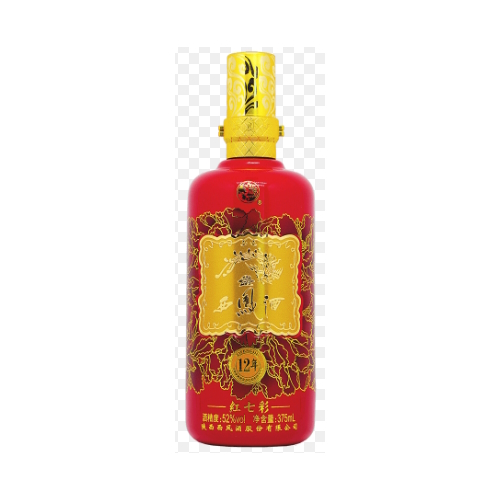
About This Product :
Aroma:
Phoenix Aroma
The Ingredients:
Sorghums, Wheat, Barley, Peas
The Spirit:
Aromas: Fruity cherry and pine.
Flavors: Grainy sweet with an expanding and elegant finish
ABV 52% (104PF)
Xi Feng Jiu has been continuously produced for more than 3,000 years before the Qin Dynasty. It takes at least 12 years of aging before blending and bottling.
The Distillation:
To start, sorghum is used as the base for fermentation. The grain is ground and steamed in order to release some of the starch. After being cooled, it is mixed with daqu, a barley and pea based qū, which will serve as the fermentation starter. The grain is fermented in mud pits. However, fermentation times are much shorter than most, at only 10 days, and the mud is scraped clean and a fresh coat applied annually. After the grain has been fermented and distilled to produce and extract ethanol, the resulting spirit is aged in “jiu hai” (Chinese: 酒海; lit. ‘sea of spirit’), rattan baskets lined with hardened hemp paper and cotton cloth, before being blended, proofed, bottled, and sold.
The Package:
A beautifully ornate 375ml bottle with screwcap inside a clear plastic case.
The Distillery:
Chinese state-level authorities determined “Feng Xiang” aroma baijiu by using Xi Feng Jiu as a reference. It translated to “Phoenix Aroma.”
The roots of Xifengjiu lie 4,000 years ago near the end of the Shang dynasty in a drink known then as “qinjiu” (qin wine). In the Rites of Zhou it was written that during the Zhou dynasty this drink, already readily known by the then ruler King Wen of Zhou, and its production methods were studied by a royal official who produced a set of technical guidelines in the brewing of alcohol called “Five Qi, Six Methods” (五齐六法), one of the earliest records of wine making techniques in the world. Over the centuries the wine became more associated with its source and by the time Pei Xingjian passed through Liulin as he guided the persian king-in-exile Narsieh back to Persia, the drink was known as “liulinjiu” after the town in which it was produced. In 757, during the Tang dynasty, it was renamed “fengxiang” (凤翔; phoenix flight) after legends of phoenix’s taking flight from the region. In the Song dynasty the poet Su Shi, while serving as a magistrate in Fengxiang wrote; “When the flowers are in bloom and the wine is sweet, one can drink without drunkenness.”
By the beginning of the 17th century, during the Ming dynasty, distilled spirit with the name “xifengjiu” was being produced by nearly 50 distilleries in Fengxiang.
In 1956, after the Chinese Civil War, the distilleries in the region were nationalized and combined into the Shaanxi Xifengjiu Co. Ltd.
The Distillery’s Website: Xi Feng’s Wikipedia Page